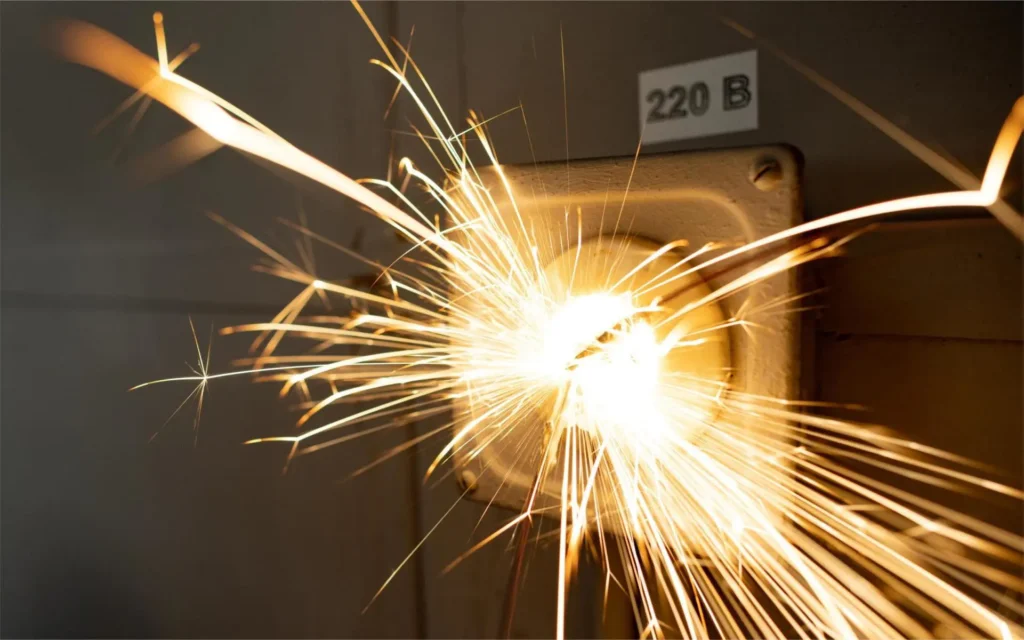
A faulty circuit breaker that sparks and refuses to reset can be frustrating and alarming. However, you can usually fix this issue without rushing to call an electrician if you have the right know-how. Below is an easy-to-follow guide that covers everything from initial checks to full troubleshooting.
What Causes Breakers to Spark and Refuse to Reset?
Several scenarios can lead to a circuit breaker spark and an immediate trip:
- Loose or poorly seated breaker in the panel
- Overloaded circuit with too many devices plugged in
- Faulty breaker that needs replacement
- Ground or short circuit somewhere in the wiring or an appliance
- Moisture intrusion into outdoor outlets or wiring
- Damaged outlet due to age, corrosion, or physical impact
In most cases, the breaker is doing its job by protecting you from an electrical hazard. Once you identify the underlying cause, you can typically restore power quickly.
Important Safety Precautions
- Turn off all appliances and lights connected to the tripped breaker before you begin.
- Wear rubber-soled shoes and work with dry hands.
- Never remove the service panel cover if you’re not fully comfortable working near live electrical components.
- Stop and consult a professional if you see signs of burnt wires, charring, or if something seems beyond your skill level.
Step 1: Perform a Full Reset
- Locate the breaker in the electrical panel that has tripped and sparked.
- Push it firmly to the OFF position. Some breakers get stuck between ON and OFF. You must push it all the way off before you can reset it.
- Flip it back to ON with a bit of pressure. If it refuses to stay on at this point, proceed to the next steps.
Many people are surprised by how much force is sometimes required to reset a tripped breaker. Make sure you hear or feel it click fully into the OFF position before switching it on again.
Step 2: Unplug Everything on the Circuit
- Identify all outlets, light fixtures, and appliances connected to the tripped circuit.
- Unplug or power down all devices to completely remove any loads.
- Attempt another reset of the circuit breaker.
If the breaker stays on when everything is disconnected, something plugged in (like a lamp or TV) could be causing a short or overload.
How to narrow it down:
- Plug devices back in one at a time, turning on each appliance to see if the breaker trips again.
- If one device immediately causes a trip, that device or its cord is likely defective.
Step 3: Check for Damaged Outlets and Wires
When the breaker refuses to stay on even with every device unplugged, you might have hidden issues like:
- Loose or corroded outlets
- Worn insulation on wiring
- Moisture-damaged fixtures
Steps to inspect quickly:
- Switch off the breaker again (if it’s not already off).
- Remove the cover plates from the outlets on that circuit, one by one.
- Look for any signs of burn marks, exposed wires, or a musty odor suggesting moisture.
- Gently tug the wiring to see if it’s loose.
If you spot serious damage or blackened areas, do not attempt to power it back on. At that point, it’s usually time to replace the outlet and have the wiring checked by an electrician.
Step 4: Inspect or Replace the Breaker Itself
Circuit breakers can fail over time, especially if they’ve tripped repeatedly:
- A weakened internal mechanism could cause frequent or premature trips.
- Signs of rust, burned plastic, or cracked housing point to a failing breaker.
How to check safely (if comfortable working with panels):
- Turn off the main breaker to the house to reduce risk (only if you know how to do so safely).
- Remove the service panel cover very carefully.
- Look for the problematic breaker and note its brand and amperage (e.g., 15A, 20A).
- Disconnect its wire, then pull the breaker out by rocking it away from the bus bar (this can be risky if you are not trained or certain of your methods).
- Look at the metal prongs for signs of scorching.
If everything else seems fine, simply replacing the breaker with an identical one might solve the problem. If a new, matching breaker still trips immediately, the issue likely lies elsewhere in the wiring.
Step 5: Check for Moisture in Outdoor Outlets
Some circuits power exterior outlets or fixtures. When moisture gets inside these outlets, they can trip the breaker:
- Open the exterior outlet cover and inspect for water droplets or rust.
- Unplug extension cords from outdoor outlets and let them dry.
- Wait until the outlet is completely dry or use a safe method to remove trapped moisture.
In wet climates or after recent rainfall, water inside an outdoor fixture can easily cause repeated breaker trips.
Step 6: Test for Ground Faults (If Applicable)
Many modern breakers are Ground-Fault Circuit Interrupter (GFCI) or Arc-Fault Circuit Interrupter (AFCI) types. They trip if they sense unsafe conditions:
- GFCI breakers trip if there’s any current leakage toward ground.
- AFCI breakers trip on detecting arc events that often indicate damaged wiring.
If you have either type, confirm whether:
- The GFCI or AFCI breaker can be reset after you remove all loads.
- Any outlet downstream has a test/reset button that might also be tripped.
Try resetting all GFCI outlets in your home (often found in bathrooms, kitchens, garages, or outdoor areas). Sometimes, a single GFCI outlet on the circuit could be the root cause.
Step 7: Use a Multimeter (Optional Advanced Check)
If you are familiar with multimeter use, you can identify if there’s a short in the wiring:
- Ensure the circuit breaker is OFF.
- Remove the breaker from the panel (if you’re confident in your skill level).
- Test for continuity between the hot wire and the neutral or ground.
- If the multimeter beeps (indicating continuity), there’s likely a short somewhere in the cable or an attached fixture.
This step is more advanced. If you’re not comfortable, it’s best to leave it to a professional electrician.
When to Call an Electrician
While many breaker issues are fixable at home, certain situations demand professional help:
- Repeated or instant tripping even after trying all the steps above
- Sparking inside the breaker panel accompanied by burning smells
- Corroded or melted wiring discovered during inspection
- Outdated or mislabeled panel with old wiring no longer up to code
Licensed electricians have specialized tools to identify short circuits, defective wiring, and potential code violations.
Preventing Future Breaker Trips
- Avoid overloading a single circuit with high-wattage devices (e.g., space heaters, hair dryers).
- Replace damaged cords immediately.
- Keep outdoor outlets protected with covers that seal out moisture.
- Label your breaker panel properly so you know which breaker controls each area.
- Schedule routine electrical inspections if your home has older wiring or if you notice frequent issues.
Wrapping It Up
Resolving a circuit breaker that sparks and won’t reset often boils down to methodical troubleshooting. First, reset it thoroughly. Then, isolate problem appliances. Inspect every outlet for damage or moisture, and test or replace the breaker itself if needed. These steps solve the majority of cases. If you still face repeated trips or find serious issues in the wiring, call a qualified electrician right away. By following these best practices, you can fix the problem and keep your electrical system running smoothly.