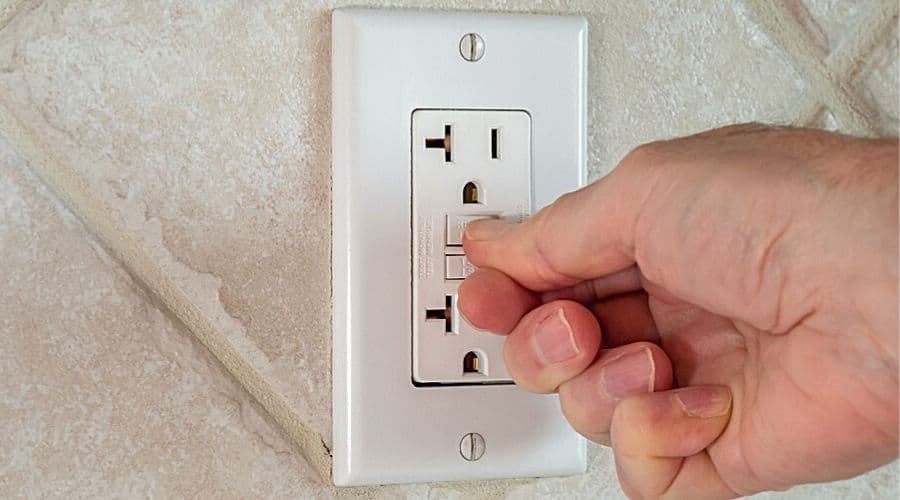
When a GFCI (Ground Fault Circuit Interrupter) outlet fails to reset or its test button won’t push in, it can throw off an entire circuit. The inconvenience often comes at the worst time—like when you need your bathroom, patio, or kitchen outlets. However, many real-life users have resolved this problem successfully, and you can do the same. Below, you’ll find direct, step-by-step methods and the reasoning behind them. The goal is simple: get your GFCI outlets working as they should, with no confusion about the process.
Remember to turn off the breaker if you must open an outlet or handle wires. Your safety is always a priority. Let’s dive right into how to make that stubborn test button functional and get power restored.
What Causes a GFCI Test Button to Get Stuck?
A GFCI test button is designed to simulate a fault so the outlet can “trip” and cut power. If it won’t push in:
- Another GFCI on the same circuit might have tripped.
- A wiring issue or a connection upstream could have failed.
- The internal mechanism of the GFCI itself could be broken.
- Moisture or paint might be restricting the test button.
- The breaker might have tripped, even if it appears ON.
When multiple GFCI outlets fail at once, it’s a big clue that power isn’t getting from the breaker (or from the first GFCI) down to the others.
Check Everywhere for Other GFCI Outlets
Many homeowners are stunned to learn that one GFCI can protect several other outlets, sometimes in different rooms, garages, or even outdoor areas. One hidden or forgotten GFCI can leave multiple outlets dead.
- Search Thoroughly
Look behind appliances, under sinks, in garages, basements, patios, or outside walls. Reset each one you find. - Press TEST Then RESET
Some people only press RESET. But pressing TEST first (holding it for a second if possible) then pressing RESET can free up a stuck internal component. - Return to the Problem Outlet
After resetting every GFCI you can locate, check whether your stuck test button now moves.
This alone often solves the issue. Real-world cases show how pressing the “mystery GFCI” can revive entire circuits, sometimes even restoring power to bathrooms or kitchens.
Confirm Power at the Breaker
Even if the breaker looks ON, it might still be partially or internally tripped.
- Flip the Breaker Off, Then Back On
Make sure the breaker that powers these GFCIs is completely switched off. Then turn it firmly back on. - Check for a Breaker Group
Some panels have multiple breakers tied together. Verify you’re flipping the correct one if your home uses shared or tandem breakers. - See if the Outlets Respond
Once you’ve reset the breaker, see if the GFCI test button moves freely.
If resetting the breaker doesn’t fix it, keep going through the steps below.
Inspect the GFCI Itself
When you’re sure no hidden GFCI is tripped and the breaker is supplying power, it’s time to look closely at the outlet in question.
- Check for Physical Damage
Look for paint or debris around the test button. If paint or gunk is blocking the button, carefully clean it off. - Look for Overheating or Cracks
GFCI outlets can fail from age, moisture, or excessive load. If you see burn marks, cracks, or corroded contacts, plan to replace the outlet.
Use a Multimeter to Test Voltage (If Comfortable)
A multimeter can confirm if power is even reaching the GFCI. Only do this step if you’re comfortable working with electrical components safely.
- Turn Off the Breaker
Remove the cover plate and gently pull out the GFCI so the wiring is accessible. - Separate the LINE and LOAD Wires
If the outlet has two sets of black and white wires, one set is typically “LINE” (power from the panel) and the other is “LOAD” (feeding downstream outlets). - Turn the Breaker On
Carefully measure voltage between the black (hot) and white (neutral) wires on the LINE side. You should see around 120 volts in the U.S. - No Voltage Means Upstream Issue
If there’s no reading, the problem is somewhere before the GFCI (a bad connection or breaker). If you have proper voltage, the GFCI is likely at fault.
This step confirms whether the GFCI has electricity coming in. If it does, your GFCI is likely faulty. If it doesn’t, you need to look upstream for a hidden GFCI or a wiring problem.
Try Replacing the GFCI Outlet
A new GFCI isn’t very expensive, and faulty ones do happen.
- Identify LINE vs. LOAD
The new outlet will have labeling for LINE (incoming power) and LOAD (downstream protection). Ensure you put the correct wires where they belong. - Connect the Wires Carefully
Tighten all terminals securely. A loose connection can cause nuisance tripping or no power at all. - Test the GFCI
Turn the breaker back on and press TEST and then RESET. If everything is correct, the new outlet’s test button should move normally.
Replacing a bad GFCI often solves random “test button stuck” problems—especially when the plastic internals jam or the device is simply worn out.
Address Moisture or Outdoor Factors
Outdoor or bathroom GFCIs can trip if exposed to water. A soaked or corroded outlet might block the test button. Even a small crack in an outdoor cover can allow moisture to seep in. Water infiltration can cause GFCI outlets to act dead.
- Look for Cracks or Poor Weather Seals
Repair or replace compromised outlet covers. A few dollars spent on a proper cover can save major hassle. - Let It Dry
If you suspect the outlet is wet, turn off power and let it dry. Some people use compressed air to blow out moisture. Only reset after it’s fully dry. - Test Again
Once dry, press the test button. If it moves freely, you’ve found your culprit.
When to Call an Electrician
If every step fails, or you’re uneasy about any part of it, contacting a professional is wise.
- Complex Wiring
Older homes can have complicated wiring paths. A professional can trace circuits. - Hidden Junction Boxes
Sometimes the real trouble lies in a hidden junction box or behind walls. An electrician uses specialized tools to find it. - Panel or Breaker Issues
If your breaker is malfunctioning or the panel is outdated, an electrician will know how to safely upgrade or replace components.
Wrapping It Up
A stuck GFCI test button can be frustrating, but most solutions are straightforward once you know where to look. Often, a hidden or unrecognized GFCI in another area of the house is the culprit. If not, there’s a good chance the GFCI outlet itself is faulty, the breaker needs a reset, or a wiring problem is disrupting the circuit. By systematically checking each possibility—starting with any other GFCIs, then the breaker, and finally testing or replacing the suspect outlet—you can resolve the issue and restore power. If you ever feel uncertain, bring in a qualified electrician to ensure everything is safe and correct.